BUXTON VILLAGE HALL
Our History
Origins
The following pages describe the history of our Hall, according to what we know, but if you have a different version, or photos, please let us know, all contributions are welcome.
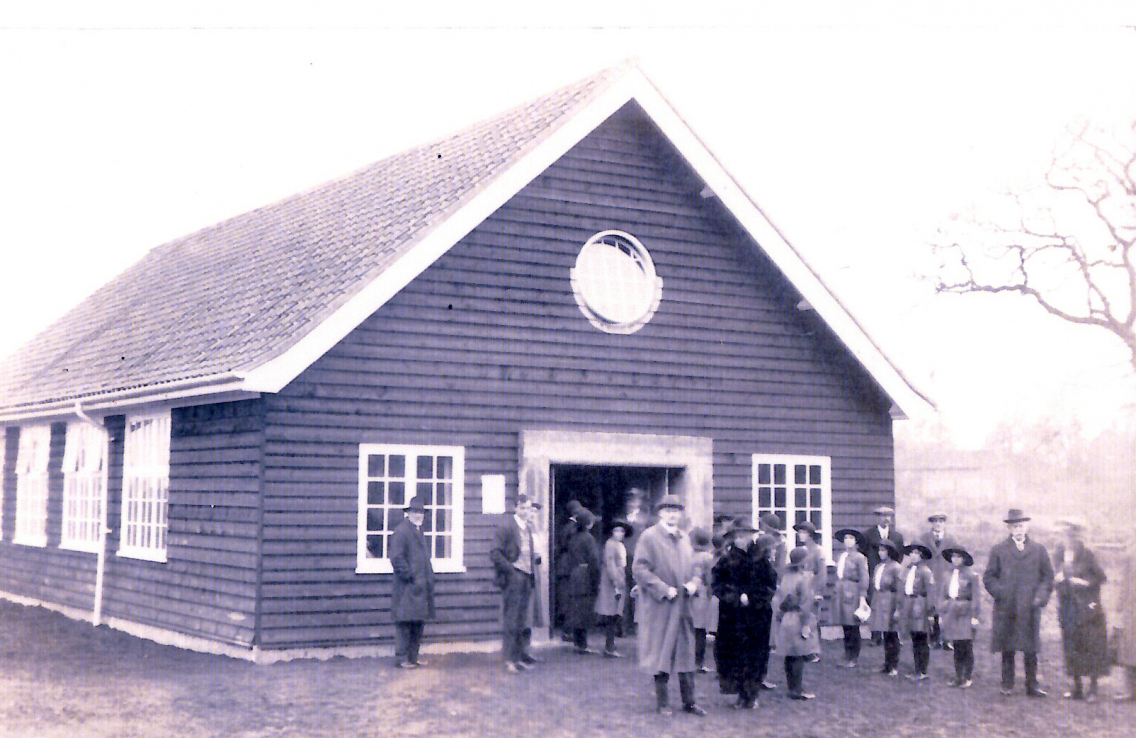
The Village Hall was built in 1926 on 4.03 acres of land owned by Philip Edward Sewell of Dudwick House, Buxton. The rest of the land was to be used as a playing field and recreation areas. He and his sister, Margaret Sewell of Dudwick Cottage had the hall built and it was officially conveyed to the Trustees who then ran it according to the rules of the foundation document, on 15th November 1927. The first Trustees were Mr P.E. Sewell, Ms M. A Sewell, Mr Bartram Sewell and Mr Thomas Simpson of Buxton.
The first meetiing of the committee was held at Dudwick Cottage on 2th Oct 1926. The Hall and Playing Field were opened by Mr J. Walter on the 11th Jan 1927. There was a report and picture in the EDP and a social in the evening attended by 300 people. Mr Gowing was MC and Dr Holman provided entertainment. Money was raised by creating shares of 5 shillings, each paying 5% and there were other collections to furnish the Hall, and fence and drain the Playing field. There were 209 bookings in the first year. Mr Digby was caretaker for the first 10 years. The Playing Field was drained, fenced, levelled and a cricket pitch, 2 tennis courts and football pitches prepared. Mr Ives was the first groundsman.
Rules included:
1. The playing field was considered closed one hour after sunset throughout the year.
2. No football was to be played after the last Saturday in March or before the second Saturday in September
3. No football was to be played on Sunday. Even the swings could not be used on Sundays.
4. Each sports club was to be responsible for the upkeep of their pitch.
In 1929, 48 members wanted a Bowling Green and this was laid by Mr Watts for £37.15 in 1929. The total cost with the surrounds came to £97.16 and Mr A.G. Bryer was in charge of the start up.
In 1932 electricity was fitted to the Hall. Later in 1937, at 3.45pm, on 29th Jan, a fire swept through the Hall. It was rebuilt by Norgates for £509 and reopened by Ms Sewell on 28th April 1937. That same year Phililp and Bertram Sewell died and Mr Carey and Mr Briscoe (who inherited Mr Sewell's Property) were appointed trustees. Later in the same year, in November, Ms Margaret Sewell died as well. She had been the Chair since its inception and she left the Village Hall a £200 legacy in her will, which was invested in Consols, with the income going to the Hall. Mr Williamson of Lammas Hall was appointed the new Trustee in her stead.
War Time Hall
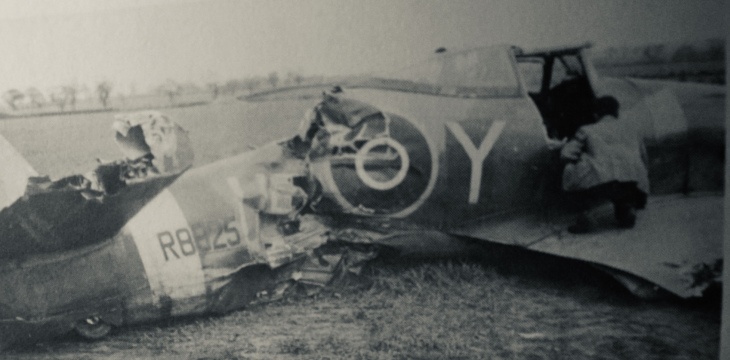
In 1940 Mrs Carey and Mr Briscoe agreed to pay for the Blackout windows so the Hall could carry on functioning in the winter evenings. There was no football or cricket although some bowls and tennis continued until 1943 when these ceased due to the lack of support. Mr Ives fed his cattle off the Playing Field in exchange for looking after the fences and ditches. Trenches were dug in the field for children to shelter in from bombs if necessary. In Sept 1940 there was the first reference to vandalism. Many window panes were broken and a notice had to be put up threatening prosecution. In Dec 1940 Mrs Briscoe was appointed Trustee in place of Mr Simpsonn who died in 1942.
In 1941 bookings picked up and donations of £19 were made to Buxton Local Forces Fund, £9 to Mr Churchill's Aid to Russia fund, £2 towards the churchyard lawn mower. By this time the Rev. Dryden was the vicar and took the Chair. In 1944 Football restarted.
Post War Hall
In June 1946 the Tennis and Bowls Clubs were restarted. The Bowls Club restored their green and in exchange were given a 5 year free lease. This ended in 1950 when they started playing a rent of £1 per annum. In 1947 the Hall was closed between Jan 29th and March 14th due to severe winter weather. The Education Committee applied to the Village Hall to use the Hall for the school as the school was too full due to children from RAF Coltishall attending. The Committee rejected the request as the Village Hall was for the use of the Village.
There was another fire in the 1950s which was put out by Mr Tom Catchpole before the Fire Brigade arrived.
In 1953 piped water was laid into the Hall. the coal Furnance was found to be beyond repair and an electric boiler was installed to replace it. A Ladies Lavatory was also installed. Ocean Wave decoration was installed to mark the Coronation of Queen Elizabeth and then taken down in 1982 on the grounds of safety.
A donation was given to Sea Palling Village Hall to help with repairs after the North Sea floods.
In 1970 an oil fired boiler was installed a cost of £208. Fairs or fêtes have been run on the Playing Field since a 2 day festival was started by Mr Kelly in the 70s, supported by the Church, the Village Hall and the school PTA.
In 1979 dry rot was found in the old cellar extending into the kitchen. This was dealt with by Mr Hallet.
In 1980 The Bowls Club Pavilion was built, this was financed by the Bowls Club on the understanding that it would eventually become part of the Village Hall property. However, now the Village Hall is responsible for the boundary fence and the Bowls Club continues to maintain its Pavilion.
In 1981 the car park was graded and ashphalted. In 1988 new radiant heaters were installed. The old boiler was replaced by a 6 pint kettle. 6 strinex radiant heaters were installed in the Main Hall as well as 3 phase electricity.
In 1993 Balay approached the Hall about erecting a £70,000 building on the Village Hall site. Tthe plan would have taken some of the car park and was thought not to be feasible.
1995 there was a lot of vandalism, with 300 panes of glass being broken. The Football hut was attacked and it was then that Mrs Valerie Nichols took over as Secretary and Treasurer, a post she held and expanded until she retired in 2024. Chris Tomlinson was selected by the Parish Council as a member to help manage the car park and play area. Security lighting and telephone alarm was fitted. The Halls deeds were kept at Barclays Bank.
Jan 1996 there was an oil leak that spilled into the drainage ditch from an oil tanker. Safety lighting was installed for £953 and the Gentleman's toilets were revamped. The new Play area was overseen by Chris Tomlinson. The Hall was creosoted, and security lights and 15 panes of glass were also broken in a 14 day rampage by vandals
In 1999 there was an extravaganza run by Mrs Nichols and her team of helpers. It was a great sucess and raised £758. Soon after smoking was banned from the Hall. In 2003 £602 was paid for repairing borken windows. All of these costs were born by the users of the hall because they had to pay for the damage.
.
How we were Financed
Prior to 1930 the money to cover the Village Hall costs was raised by an entertainment committee, but in 1930 hire charges were first introduced to pay for the running costs; heating at 1 shilling and sixpence, and lighting sixpence per hour. In 1950 the fees were raised to £1 per meeting. In 1976 it was suggested that each member should pay 10 pence per meeting, although this suggestion was met with resistance from the community groups operating from the hall at that time, the concept was approved and these were then later raised to 45 pence per member per meeting to pay for the running costs.
We are now financed by hire fees, donations, grants and legacies. We are a registered charity so donating to us benefits the community and the groups that use the Village Hall, but it can also help off-set the amount you pay to government through a self assessment tax return, corporation tax and inherritance tax. Let us know if this is of interest to you.
History of Buxton
Buxton is of Anglo-Saxon and Viking origin; it derives from an amalgamation of Old English and Old Norse for a settlement, either named for 'Bucca' or deer.
In the Domesday Book, Buxton was recorded as a settlement of 34 households in the hundred of South Erpingham. The principal landowners were Ralph de Beaufour and de Warren
In 1931, the parish had a population of 490. On 1 April 1935, the parish was abolished to form Buxton with Lamas.
Buxton Watermill has stood in the village in some form since before the Domesday Book and was last rebuilt in 1754 by the local merchant, William Pepper. In total there are 13 listed buildings, including Buxton Mill, Buxton War Memorial, St Andrew’s Church and the Railway Bridge over the River Bure. As well as the core village, there is a distinct community in a cluster of houses at The Heath, located to the south off Sandy Lane.
Mill Street, one of the oldest streets in the village, runs from the mill towards St Andrew’s Church. Buxton Mill, rebuilt in 1754 and refurbished considerably after a fire in 1991, was used as a restaurant in the late 20th century and is now flats. The Village Hall with its playing fields and Buxton Primary School are located either side of the church. A village sign, a mill stone, was erected in 1977. This part of the village is characterised by flint-knapped buildings; a railway station opened in 1879, the primary school established in 1796, but later expanded in 1822, the 13th century St Andrew’s Church was renovated in 1858.
Dudwick House, set in extensive parkland, was built in 1845 and rebuilt in 1935. It was formerly home to the Wright and Sewell family, philanthropic Quakers who established the estate, school and Red House on the edge of the parish. Anna Sewell who is thought to have based some of her book Black Beauty on this house and grounds stayed with her Uncle who owned it. By the nineteenth century, Dudwick Park had passed to the Sewell family, another Quaker family, who further extended the village school; in 1927, they funded the construction of the village hall. In 1937, the house was passed to Percy Briscoe, a tea-planter from Ceylon, who significantly remodeled the exterior.
Eight “Feoffee Cottages” built by the John Picto Trust sit back from Crown Road, behind a pleasing green space which is currently private gardens, allotted to four of the homes. It was designated Local Green Space by Broadland District Council in recognition of the green, open feel it provides in the centre of Buxton. These houses are still owned and managed by the Picto Trust, a local Charity that aims to provide support to those in need in Buxton and Lamas. If as a resident of our village, you are struggling please contact the Picto Trust, via the Parish Council, as they are one of the Trustees of this local charity. The Village was home to a workhouse during the eighteenth century due to the provisions of the English Poor Laws. The foundations of the building still exist on the Buxton-Horstead road.
On the corner of Crown Road and Lion Road is the Black Lion pub, together with a former bowling green at the rear. Buxton and Lamas Parish Council have a Neighbourhood Plan which guides what and how development proceeds in the Village so the historical and natural assets are acknowledged and we keep the things we love.